Bangladesh Trial Report:
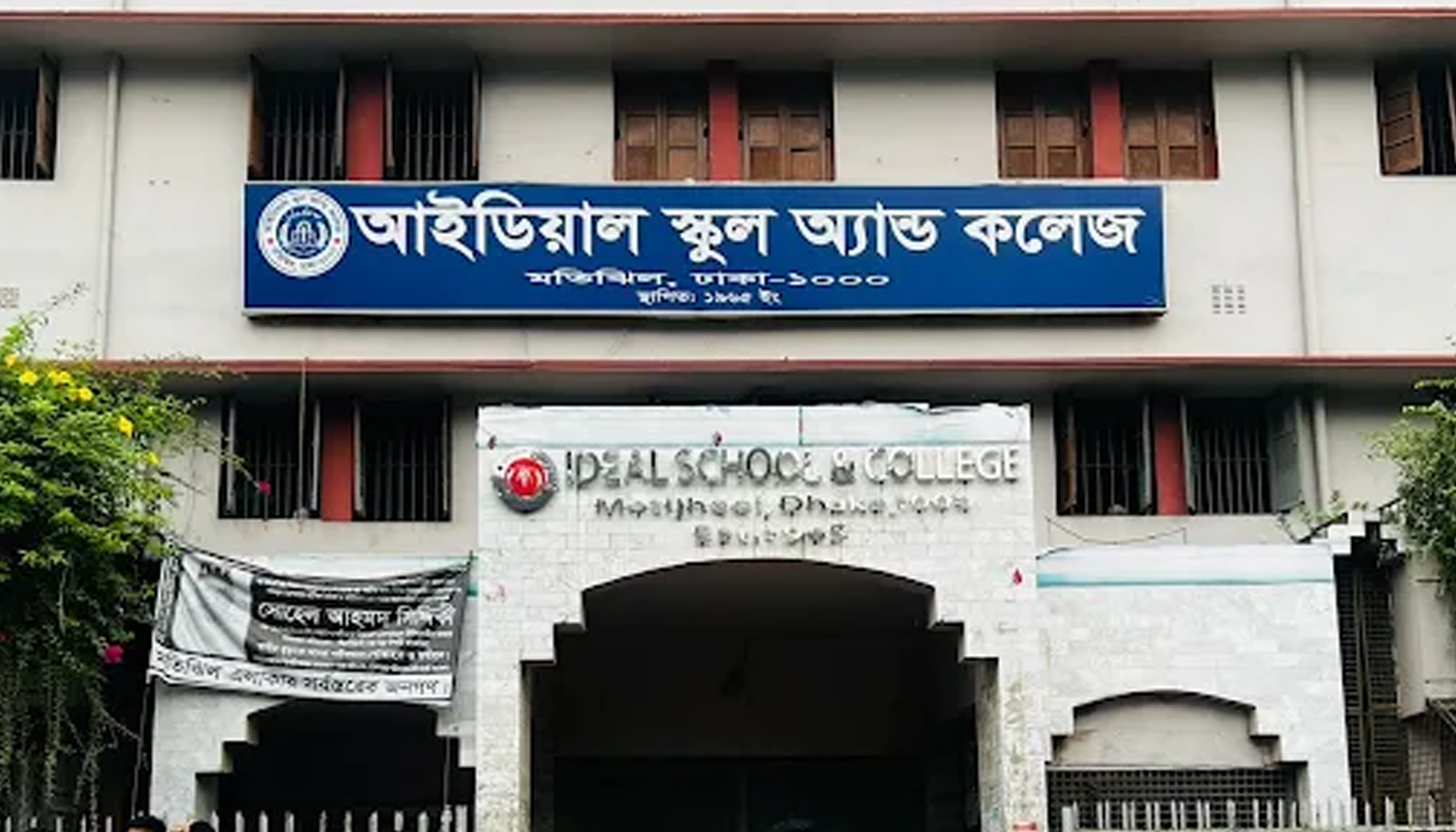
Several teachers at the historic Ideal School and College in Motijheel, Dhaka, have been accused of providing coaching to students from their own institution. According to the allegations, some of these teachers coach hundreds of students, while others reportedly teach between 700 and more than 1,000 students. The coaching operations are allegedly run in different parts of the capital, including Shahjahanpur, Banasree and Shahjadpur.
Some of the teachers named in the allegations have claimed that they teach only a small number of students. Some have denied teaching students from their own institution, while one teacher said he no longer provides coaching.
Nizam Kamal Accused of Coaching 1,000 Students
Nizam Uddin Kamal, an English teacher, has been accused of coaching around 1,000 students. According to the allegations, he runs his coaching operation in Shahjahanpur. He reportedly teaches students on the second floor, while four assistants conduct examinations on the ground floor.
Asked about the allegation that he coaches around 1,000 students from his own school, Nizam Uddin Kamal, an MPO-listed teacher, responded, “Is that even possible?”
When asked how many students he actually coaches, he immediately disconnected the call.
Sakhawat Accused of Coaching 900 Students
Sakhawat Sohel, a social science teacher, has been accused of coaching around 900 students. The allegations state that he runs his coaching operation in Shahjahanpur.
When contacted for comment, Sakhawat Sohel, an MPO-listed teacher, said he would speak about the matter later and then disconnected the call.
“I No Longer Teach Students”
Sharif Penu, an English teacher who currently serves as a teachers' representative at Ideal School and College, has been accused of running a coaching operation in Shahjahanpur.
Asked about the allegation, he said, “I no longer teach students.”
When asked when he stopped providing coaching, he replied, “Come and speak to me in person.” He then disconnected the call.
“I Teach No More Than 20 Students per Batch”
Jisan Ahmed, a mathematics teacher, has been accused of coaching between 500 and 600 students in North Shahjahanpur.
However, Jisan Ahmed said, “You can come and visit. I teach only a small number of students. I do not teach more than 20 students per batch.”
Asked whether he teaches students from his own school, he said, “By my own school, I mean the branch where I teach classes. I do not teach students from that branch. I teach students from other branches. Students from other branches are just like students from other schools.”
“I Have Only a Few Students”
Abul Kalam Azad, an English teacher, has been accused of running coaching classes in North Shahjahanpur.
Asked about the allegation, the MPO-listed teacher said, “I have only a few students. I barely manage to get by. The classes run on Fridays and Saturdays until before lunchtime. Come and see for yourself on other days; they are closed. You will not be able to prove it on other days.”
Regarding the list of teachers accused of running coaching classes, he said, “Did you ask whether the person who provided the names also teaches students? There is no teacher who does not teach outside the classroom. All the good teachers teach.”
He further alleged that the list targeted teachers affiliated with the Bangladesh Nationalist Party (BNP).
“A group of teachers has been named, and they are BNP supporters. The names were given by a fascist group. That person also teaches,” he said.
“These Are False and Fabricated Allegations”
English teacher Murad Ahmed has been accused of coaching between 400 and 500 students.
Asked about the allegation, Murad Ahmed said, “These are false and fabricated allegations.”
Coaching Classes in a Five-Room Flat
Social science teacher Umme Fatima has been accused of renting a five-room flat in Shahjahanpur to run coaching classes on her own. She is alleged to coach between 800 and 900 students.
There are also allegations that she has continued the operation by keeping parents and some teachers on her side over an extended period.
Several attempts were made to contact Umme Fatima from Wednesday through the evening, but she disconnected the calls. She did not respond to messages sent by mobile phone or WhatsApp.
Al Amin Accused of Coaching 700–800 Students
Al Amin, a Bangla teacher at the Banasree branch of Ideal School and College, has been accused of coaching around 700 to 800 students.
Repeated attempts to contact him were unsuccessful. He did not respond to messages either.
Large Class Sizes a Major Reason for Coaching
Bangla teacher Mahiuddin has been accused of coaching between 400 and 500 students. However, he rejected the allegation that he teaches that many students.
“The allegation that I teach 400 to 500 students in coaching classes is not correct. I do not teach that many. At present, I probably have fewer than 100 students. Some of my students are in Kadamtali and other areas. They include students from my own school as well as other schools, but the number from my own school is small,” he said.
Asked whether most teachers at Ideal School provide coaching, he said that was also not correct.
Asked why teachers turn to coaching, Mahiuddin cited overcrowded classrooms as a major factor.
“The large number of students in classrooms is one of the main reasons behind the current coaching situation. Government guidelines stipulate 35 students per class, but sometimes 60 to 70 students are admitted to a class at our school. As a result, a teacher cannot cover everyone's lessons equally when teaching in the classroom,” he said.
He also pointed to teachers' financial difficulties.
“Teachers' financial problems are another factor. Salaries at our school are not very high. Renting a decent apartment in Dhaka costs Tk 30,000 to Tk 35,000, but many teachers do not earn enough to meet such expenses,” he said.
Asked about possible solutions, Mahiuddin said teachers' salaries and allowances should be increased and proposed pay scales and benefits should be implemented effectively.
“If the government increases teachers' salaries and allowances and properly implements the new pay scale or benefits being discussed, teachers will be able to manage their lives better. Initiatives such as nationalisation would also reduce uncertainty for teachers. Private and non-MPO teachers have limited retirement security as well. Addressing these issues could reduce teachers' dependence on coaching,” he said.
Other Teachers Named in the Allegations
English teacher Lovely Akter has been accused of coaching between 500 and 600 students.
Asked about the allegation, she said, “Where do you get this information? I teach only a small number of students.”
Asked about the rule prohibiting teachers from coaching students from their own institution, she said, “I will speak about this later. I am busy right now.”
Why Teachers Turn to Coaching
Mahiuddin identified overcrowded classrooms and teachers' financial difficulties as reasons behind the prevalence of coaching among teachers at Ideal School and College.
However, questions also arise over potential conflicts of interest when teachers provide coaching to students from their own institution, whether students face indirect pressure to attend such classes, and what the institution's relevant rules and policies stipulate.
What the Coaching Policy Says
Under the Education Ministry's Policy on Stopping Coaching Business by Teachers of Educational Institutions, 2012, teachers are not permitted to provide coaching or private tuition to students of their own institutions.
However, teachers may privately tutor up to 10 students from outside their institutions, subject to permission from the head of the institution. The policy also restricts commercial coaching operations centred on individual teachers, the recruitment of students for coaching and promotional activities for coaching services.
The policy contains various provisions intended to ensure that teachers provide proper instruction in classrooms and do not make students dependent on coaching.
Consequently, running coaching classes for students from one's own institution or providing private tuition beyond the permitted limit would be contrary to the 2012 policy.
Although the policy imposes various restrictions to curb commercial coaching, it does not specify separate, fixed penalties for violations. However, disciplinary action may be taken under the relevant service rules and prevailing regulations if a teacher is found to have violated the policy.
If allegations of coaching students from one's own institution or breaching other restrictions are established, departmental or administrative action may be taken against the teacher concerned.
“Coaching Business Must Be Stopped Through Legislation, Not Just a Policy”
Md Ziaul Kabir Dulu, president of the Guardian Unity Forum and a petitioner in a writ petition seeking to curb coaching business in educational institutions, said coaching should be prohibited through legislation.
“Coaching business must be stopped through legislation. It cannot be stopped through a policy that exists merely for show. To ensure quality teaching in classrooms, coaching business must be prohibited, and teachers involved in it must face penalties of varying degrees,” he said.
He added that mobile court operations and stronger government monitoring could help curb the practice.
“Banning coaching business is essential to bring teachers back from coaching centres to classrooms,” he said.
A Teacher Accused of Coaching Included in Academic Committee
A 25-member committee was formed at Ideal School and College on Wednesday (October 7). A teacher accused of running a coaching business was included as a member of the committee.
The teacher, Nizam Uddin Kamal, is alleged by people familiar with the matter to be among those heavily involved in coaching operations. The inclusion has drawn objections from parents opposed to coaching and other concerned individuals.
What the Institution's Principal Says
Asked whether the authorities were aware that teachers from their own institution were providing coaching and whether any action would be taken, Principal Lal Mohammad said he had joined the institution only three and a half months earlier.
“Honestly, I am new here; I have been here for three and a half months. My concern is whether classes at my school or college are being conducted properly. If someone teaches at a private residence or inside a home outside the institution, it is difficult for me to keep track of that,” he said.
He added that conducting raids was not the responsibility of the institution's principal.
“Conducting raids is not our job. That is actually the responsibility of the police and the relevant education authorities, including the deputy commissioner and the additional deputy commissioner for education. They are responsible for controlling coaching business. If someone were doing it inside my institution, I could address it. We have not been given the authority to deal with such matters outside the institution,” he said.
Asked about teachers who cited financial difficulties or said they taught students from other branches, the principal said it was difficult to avoid every such issue in society.
“To get by in society, there are many things you cannot simply avoid. Senior teachers also provide coaching. As administrators, we have to balance many things; otherwise, problems can arise,” he said.
He added that administrators sometimes had to make compromises to achieve their objectives.
“I try to see everyone in a positive light. If I cannot maintain that balance, I may not be able to achieve everything I want. Even if I manage to do 70 per cent of what I intended, I would not be satisfied if I could not do it fully,” he said.
Coaching Business at Ideal School: Teachers Themselves Running Coaching Classes
Read More