Mainul Hossain Pinnu, reporting from Bangkok, Thailand
Bangladesh is seeking increased financing and cooperation from international partners to revive its fragile economy, reform the banking sector, boost revenue collection and tackle inflation. Discussions are underway with the World Bank, International Monetary Fund (IMF), Asian Development Bank (ADB), Islamic Development Bank, China Exim Bank and relevant US agencies. The government expects progress in negotiations for the required financing within the next two to three months.
At the same time, the government plans to reduce dependence on borrowing and encourage more foreign direct investment (FDI) and joint investment. Bangladesh has also sought increased assistance from the United States, citing its substantial imports of aircraft, fuel oil, soybeans and other products from the country, alongside improving bilateral relations.
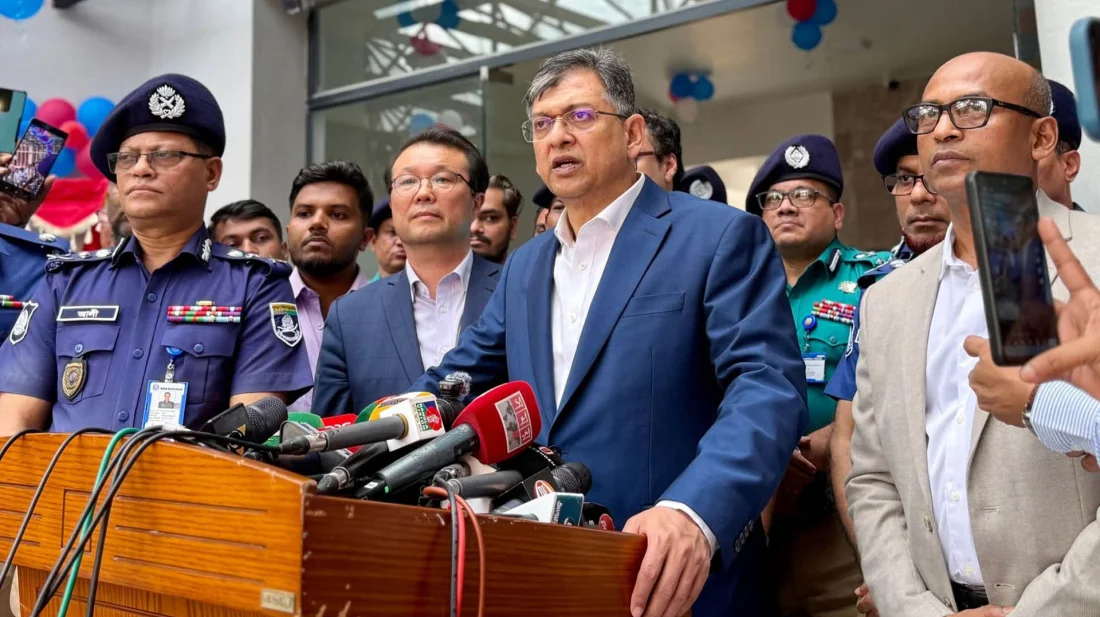
Finance Minister Amir Khosru Mahmud Chowdhury said relevant US parties had agreed with Bangladesh's position, although the amount and nature of the expected assistance had yet to be finalised.
The discussions on economic recovery, reforms and international financing took place on the sidelines of the annual meetings of the IMF and World Bank Group in Bangkok, the capital of Thailand.
Hope for Financing to Revive a Fragile Economy
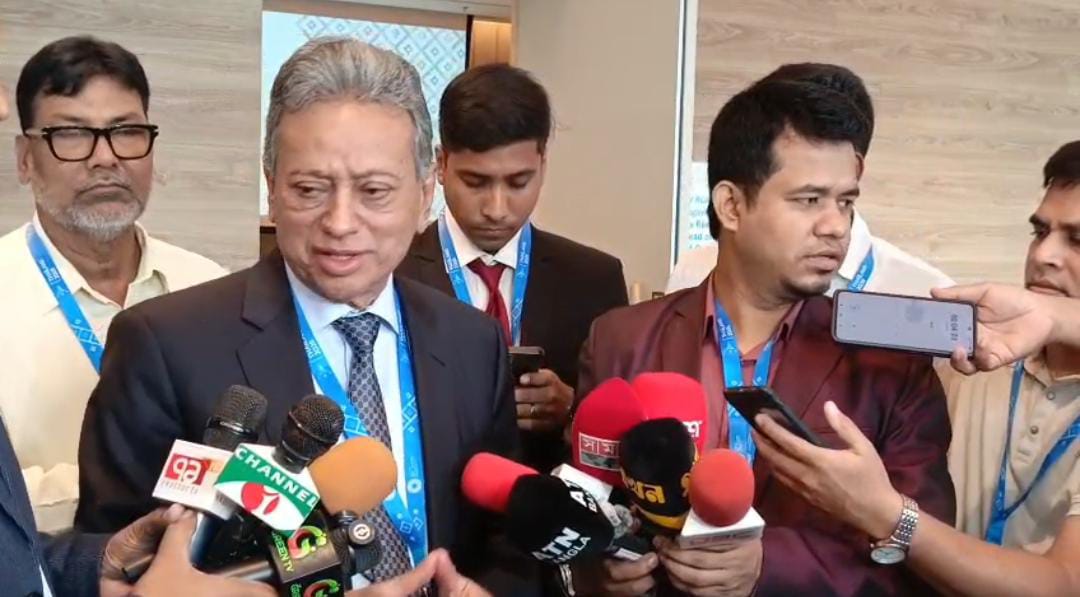
Dr Rashed Al Mahmud Titumir, adviser to the prime minister on finance and planning, said discussions with the World Bank, IMF, the US Treasury Department and other international development partners had highlighted the fragile economic situation inherited by Bangladesh. However, he said, the partners had also expressed confidence in the government's own strategy for economic recovery and reform.
According to Titumir, the government has acknowledged the country's economic weaknesses and is pursuing recovery through transparency and accountability. Although the Middle East crisis has created additional pressure on energy and essential commodity prices, international partners consider the government's response, banking sector reforms and poverty reduction programmes realistic.
Titumir said discussions were underway with development partners to secure the financing needed to implement the economic recovery plan. He expects progress in negotiations over the next two to three months but did not disclose any specific financing amount, terms or final decisions.
Bangladesh Seeks Increased US Assistance
After a meeting with officials of the US Treasury Department, Finance Minister Amir Khosru Mahmud Chowdhury said Bangladesh deserved greater assistance in view of progress in bilateral relations and the country's substantial imports from the United States.
The meeting covered debt management, US assistance and overall bilateral relations. The minister also held discussions with representatives of the US Exim Bank and various agencies involved in assistance programmes.
He said Bangladesh imports aircraft, fuel oil, soybeans and other products from the United States. Against this backdrop, Dhaka had emphasised that increased cooperation should reflect the progress made in bilateral relations.
Although the relevant US parties agreed with Bangladesh's position, the amount and form of any additional assistance remain uncertain.
The government also intends to reduce reliance on borrowing and expand FDI and joint investment. The finance minister said detailed discussions had taken place with the US Exim Bank on investment opportunities. Higher investment, he said, could accelerate production, employment and broader economic activity.
Revenue Growth Without Raising Tax Rates
A key objective of the government's economic reform programme is to increase the tax-to-GDP ratio without raising tax rates.
According to Titumir, patronage in tax administration and an oligarchic system under the previous government prevented revenue collection from reaching the desired level. As a result, Bangladesh's tax-to-GDP ratio remained below 7 per cent.
The current government is working to expand the tax base, prevent tax evasion and make tax administration more transparent, taxpayer-friendly and technology-driven.
Progress has also been made towards separating revenue policy formulation from revenue collection. A committee formed to examine the issue has submitted its report, and the government is working to implement the reform through an executive order, Titumir said.
Measures to Restore Discipline in the Banking Sector
Reducing non-performing loans, cleaning up banks' financial statements and strengthening institutions weakened by irregularities are among the government's key priorities. Titumir said a time-bound plan had been developed to address these challenges.
He said customers of Sammilito Islami Bank had started receiving their money back. The government has also taken steps to reduce potential financial pressure on depositors.
Regarding central bank independence and the effectiveness of monetary policy, Titumir said the government was prioritising coordination between fiscal and monetary policies without directly interfering in the Bangladesh Bank's operations.
He added that, alongside controlling inflation, creating a favourable environment for investment and production was essential.
The government has also earmarked a special financing package of approximately Tk 60,000 crore to help reopen closed factories and increase credit flows to the private sector, he said.
The government expects the package to stimulate productive activities, encourage investment and create employment opportunities.
Inflation and Poverty Under Pressure
The ongoing crisis in the Middle East has created fresh uncertainty for Bangladesh's economy. Higher fuel prices can increase transportation and production costs, eventually putting further pressure on the prices of essential commodities.
Managing the cost of living for low-income households while pursuing economic recovery therefore remains a major challenge.
Titumir said the government had introduced social protection programmes such as the Family Card and Farmers' Card to help shield ordinary people from inflationary pressures.
The objective is to prevent external economic shocks from placing the entire burden on households and to avoid a further deterioration in poverty, he said.
Referring to a recent World Bank report, Titumir said it had highlighted that approximately eight million people had fallen below the poverty line amid inflationary pressure.
The government believes that job creation, social protection and increased investment in productive sectors can help reverse the situation.
Financing programmes supported by the World Bank, ADB and Islamic Development Bank are also available to address mounting pressure in the energy sector. Discussions are underway to maintain and, where necessary, increase such assistance.
IMF Warns of Global Debt Risks
As Bangladesh seeks greater international support for economic recovery, IMF Managing Director Kristalina Georgieva has warned of mounting pressure from public debt and weaknesses in financial management worldwide.
Speaking at the annual meetings of the IMF and World Bank in Bangkok, she said government bond yields were rising and governments were facing increasing pressure to manage growing debt burdens.
She stressed the need for urgent reforms in public financial management, stronger revenue collection and more rational government spending before financial vulnerabilities deepen further.
According to Georgieva, the global economy has demonstrated resilience despite multiple shocks and uncertainties, but its capacity to withstand further pressure is approaching its limits.
She also warned that although investment in artificial intelligence was creating new economic activity, poorer countries were not benefiting equally. High energy costs were adding further pressure to their economies.
Outlining the responsibilities of major economies, Georgieva said China needed to spend more, the United States needed to save more, and Europe needed to invest more.
Government Wants National Ownership of Reforms
Titumir said the economic reform programme had not been imposed from outside but had been developed in response to Bangladesh's needs and the government's political commitments.
He said the election manifesto had outlined reforms in taxation, the banking sector, investment and economic governance.
The government's five-year economic strategy and reform plan also reflect this approach, he added. According to Titumir, identifying structural problems, determining implementation methods and pursuing reforms within specific timelines had helped build confidence among international partners.
However, confidence expressed by development partners and progress in negotiations do not necessarily mean that financing has been secured.
The effectiveness of the government's plans will ultimately depend on implementation, particularly in revenue reform, banking sector discipline, investment growth and efforts to control inflation.
Progress in financing negotiations over the next two to three months will also be an important factor in determining the pace of Bangladesh's economic recovery.
Bangladesh Seeks International Support for Economic Recovery and Reforms
Read More