Thomas Dooley did not exactly discover anything new about Bangladesh football in Jakarta. In fact, almost everything the American-German coach said after Bangladesh’s humiliating 9-2 defeat to Indonesia in the ASEAN Cup group-stage final match has been discussed, debated and repeated for years.
The difference this time was perhaps the scale of the defeat—and the fact that the observations came from a coach who had just watched the shortcomings unfold against a much faster and technically superior opponent.
Tap here to add The Daily Star as a trusted source google-preferred-source-badge
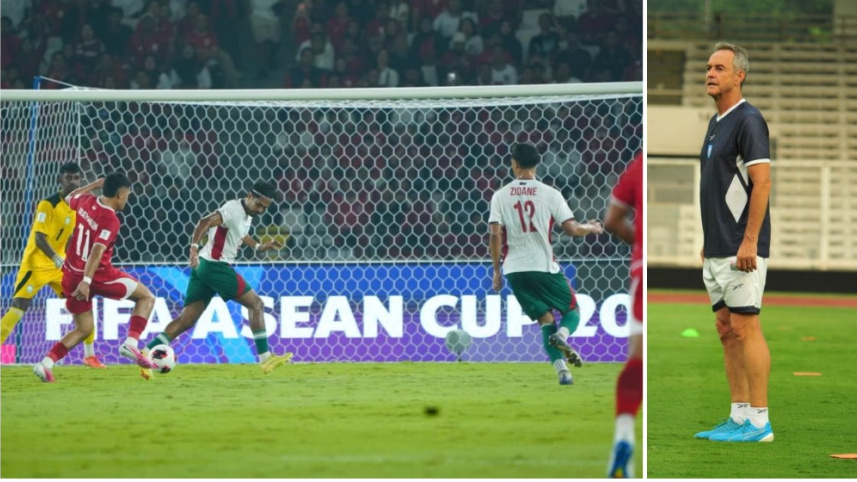
At the Gelora Bung Karno Stadium in Jakarta, Bangladesh were simply unable to cope with Indonesia’s pace, intensity, technical quality and decision-making. Despite having several overseas-based players, including Hamza Choudhury, Shamit Shome, Zidane Yousuf, Farhaan Ali Wahid, Shuki Itofusa, Tareq Kazi Raihan and Zayyan Ahmed, Bangladesh were exposed repeatedly as Indonesia turned the match into a one-sided contest.
The gulf was not merely tactical. It was a reflection of the footballing environments from which the two teams have emerged.
Bangladesh, ranked 181st in the FIFA rankings, finished the tournament with three defeats, conceding 13 goals and scoring only twice. Indonesia, ranked 118th, demonstrated why there is such a substantial gap between the two sides.
Image
Dooley’s diagnosis was blunt: Bangladesh players simply do not get enough time playing and training at the intensity required to compete at a higher level.
“What we can learn [from this tournament], it is always like this when you want to develop and get better: it doesn't come overnight; it takes time,” Dooley said. “You have to find out what players you have, how they think, play, and train, and then discover what mistakes they make when real game time comes.”
There is little novelty in that assessment.
Bangladesh’s domestic coaches have been saying much the same thing for years—about inadequate training intensity, limited quality matches, slow decision-making, technical deficiencies and the lack of a sufficiently competitive domestic league. Yet the problems remain stubbornly familiar.
Bangladesh football’s bitter lesson in Jakarta: Dooley echoes old concerns
Read More